
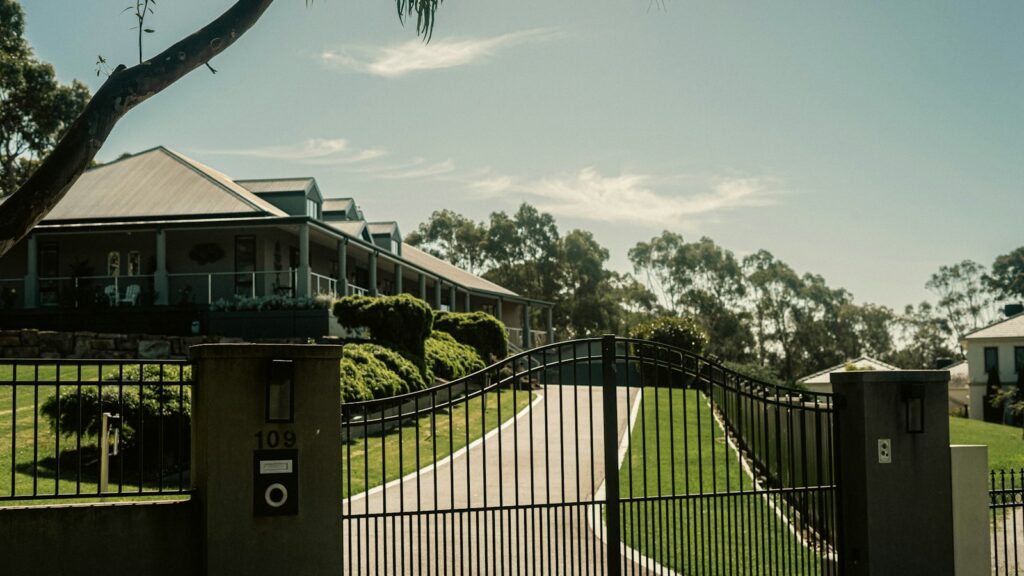
Home Minister Datuk Seri Saifuddin Nasution Ismail has set out the house arrest conditions for former prime minister Datuk Seri Najib Razak, telling the Dewan Rakyat on Thursday (Nov 12) that Najib may live only with his immediate family at his home in Jalan Langgak Duta while he serves the rest of his SRC International sentence. He also said the government had turned down a written request from Najib to use a second residence.
Saifuddin said the Federal Territories Pardons Board attached four categories of conditions to Najib’s conditional pardon. They cover where he lives and who he lives and associates with, his movement and visitors, his use of telephones and other telecommunications devices, and compulsory rehabilitation and intervention programmes.
Under the conditions, Najib may live only with his wife, children, children-in-law and grandchildren unless he first obtains written permission, and anyone else who wants to visit him needs prior written approval, the minister said. He may not leave the house or move to another address without written permission, and he may use only telephones and telecommunications devices registered with the Prisons Department.
He is also barred from making statements to the media, appearing on social media, attending public functions and taking part in political activities. Saifuddin said the conditions were read out to Najib before he left Kajang prison for his home on Tuesday night.
On the request for a second home, Saifuddin said the Pardons Board’s decision named only one residence, the house in Jalan Langgak Duta, and the ministry was bound to follow it. “We could not accede to Najib’s request,” he told the House.
He said Najib would be sent back to Kajang prison, or to another prison chosen by the head of the Prisons Department, if he broke any of the conditions, and that the details of enforcement would be set out in directives and procedures. The Prisons Department also has powers under the Prisons Act to impose further conditions for control and supervision, he added, and the conditions would serve as a framework for handling similar cases in future.
Saifuddin was answering questions from several MPs, including whether the conditions would be gazetted and made public. He also said he would raise a proposal to declassify the minutes of the Pardons Board meeting on Najib’s case at the next Cabinet meeting, while noting that the matter was one for the Attorney-General to decide.
Separately, the Attorney-General’s Chambers told the High Court in Kuala Lumpur on Thursday that the government would object to the Malaysian Bar’s fresh bid to challenge the Pardons Board’s decision allowing Najib to serve the rest of his sentence at home. A senior federal counsel told High Court judge S Indra Nehru that the decision was non-justiciable because it related to a decision of the Yang di-Pertuan Agong in presiding over the Pardons Board meeting.
The judge fixed March 17 next year to hear the objections from the government and Najib. The Bar filed its judicial review application on Nov 10, naming the Federal Territories Pardons Board, the law and institutional reform minister, the head of the Prisons Department and Najib as respondents, and is seeking to quash the board’s proceedings and decision.
Najib began serving the rest of his six-year sentence in the SRC International case under house arrest on Nov 10. The sentence is due to end on Aug 23, 2028, after which he is due to return to Kajang prison from Aug 24, 2028 to serve his sentence in the 1MDB case.
The Court of Appeal is due to decide on Jan 7 on a separate appeal by the Bar against the Pardons Board’s January 2024 decision to reduce Najib’s prison sentence and fine.